Description
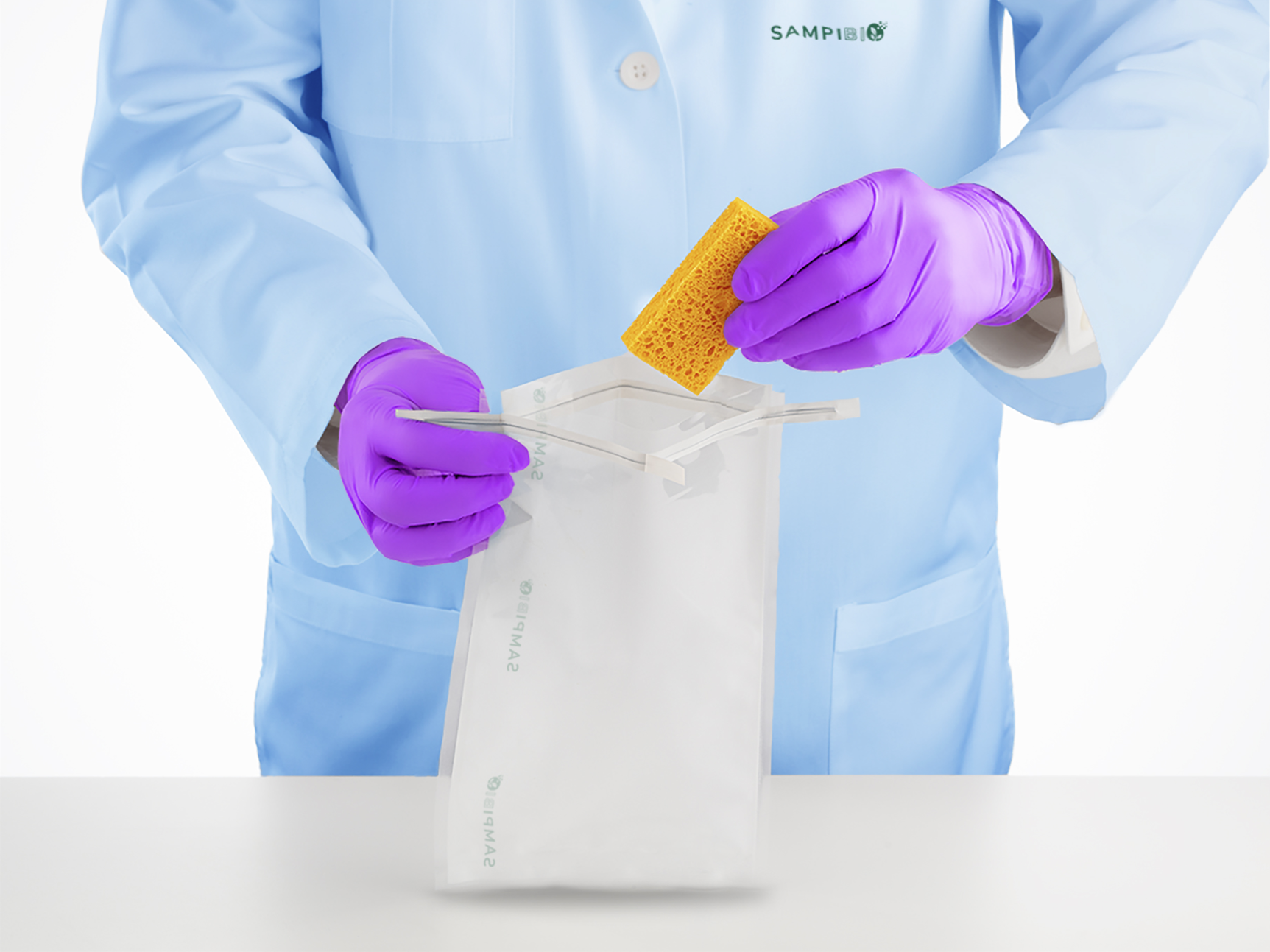
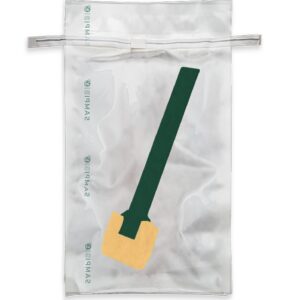
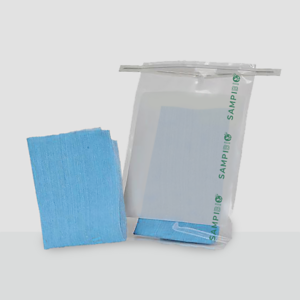
SAMPIBIO® Sponge Sampling kits are designed for effective microbiological surface sampling where high absorbency, gentle contact, and reliable microorganism recovery are required. Sponge sampling is widely used in routine environmental monitoring across food production, pharmaceutical manufacturing, and hygiene-critical environments where larger surface areas must be tested.
The absorbent sponge structure allows efficient collection of microorganisms across wide sampling areas while remaining non-inhibitory and biocide-free. This ensures accurate microbiological analysis without interfering with the natural microbial population present on surfaces.
Sponge Sampling Options
SAMPIBIO® Sponge Sampling kits are available in two sponge materials to suit different sampling conditions and surface types.
Cellulose Sponge
Cellulose sponges provide excellent absorbency and microbial recovery, making them ideal for routine environmental monitoring. Their soft structure allows effective sampling of delicate or smooth surfaces while efficiently capturing residues and microorganisms.
Polyurethane Sponge
Polyurethane sponges offer increased durability and strength compared to cellulose, making them suitable for rougher surfaces or applications requiring more robust handling. They maintain their structure during sampling while still providing effective microorganism recovery.
Benefits
- High absorbency for improved microorganism recovery
- Large surface coverage for representative environmental sampling
- Biocide-free and non-inhibitory materials for accurate microbiological analysis
- Ready-to-use kits for simplified sampling workflows
Features
- Supplied sterile in homogenisation-tested sampling bags
- Available in dry or pre-moistened formats with calibrated diluents
- Sample identification area for traceability and documentation
- Batch traceable with sterility documentation
Typical Applications
- Food production hygiene monitoring
- Environmental monitoring programs
- Surface sampling in pharmaceutical facilities
- Quality assurance and contamination investigations




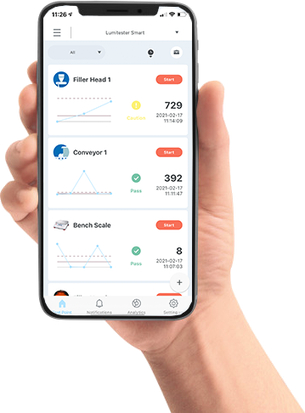
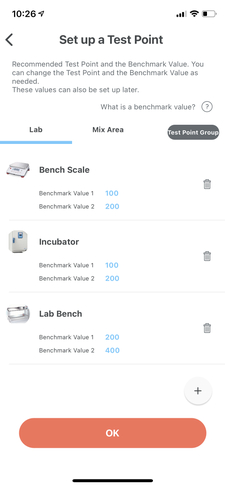
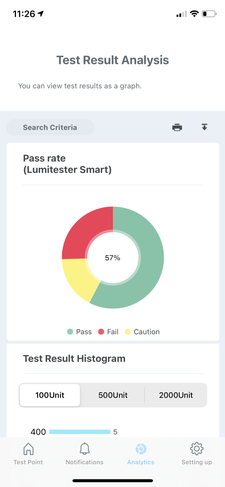 Exportable Data and Reports for Regulatory Compliance

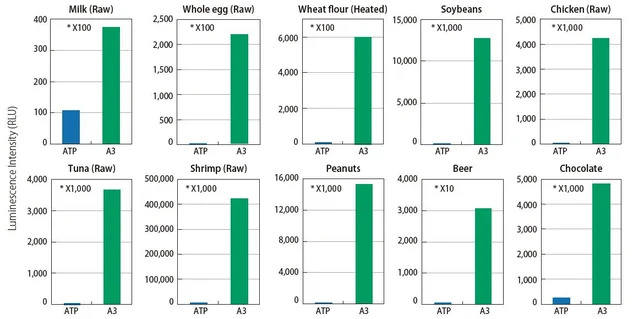 See how A3 technology finds what ATP technology can’t