
Easy Plate - Staphylococcus Aureus (SA)
 Kikkoman Biochemifa · Easy Plate range
Easy Plate SA is a ready-to-use prepared media plate for counting Staphylococcus aureus. A chromogenic substrate turns S. aureus colonies blue, so they are easy to identify and count in 24 hours, with no egg-yolk reaction to confirm.
| Incubation | 24 ± 1 h at 35 or 37 ± 1 ℃ |
| Pack size | 100 tests (25 × 4 bags) |
| Shelf life | 12 months unopened (2–8 ℃) |
| Certification | AOAC RI PTM, MicroVal, NordVal |
Benefits
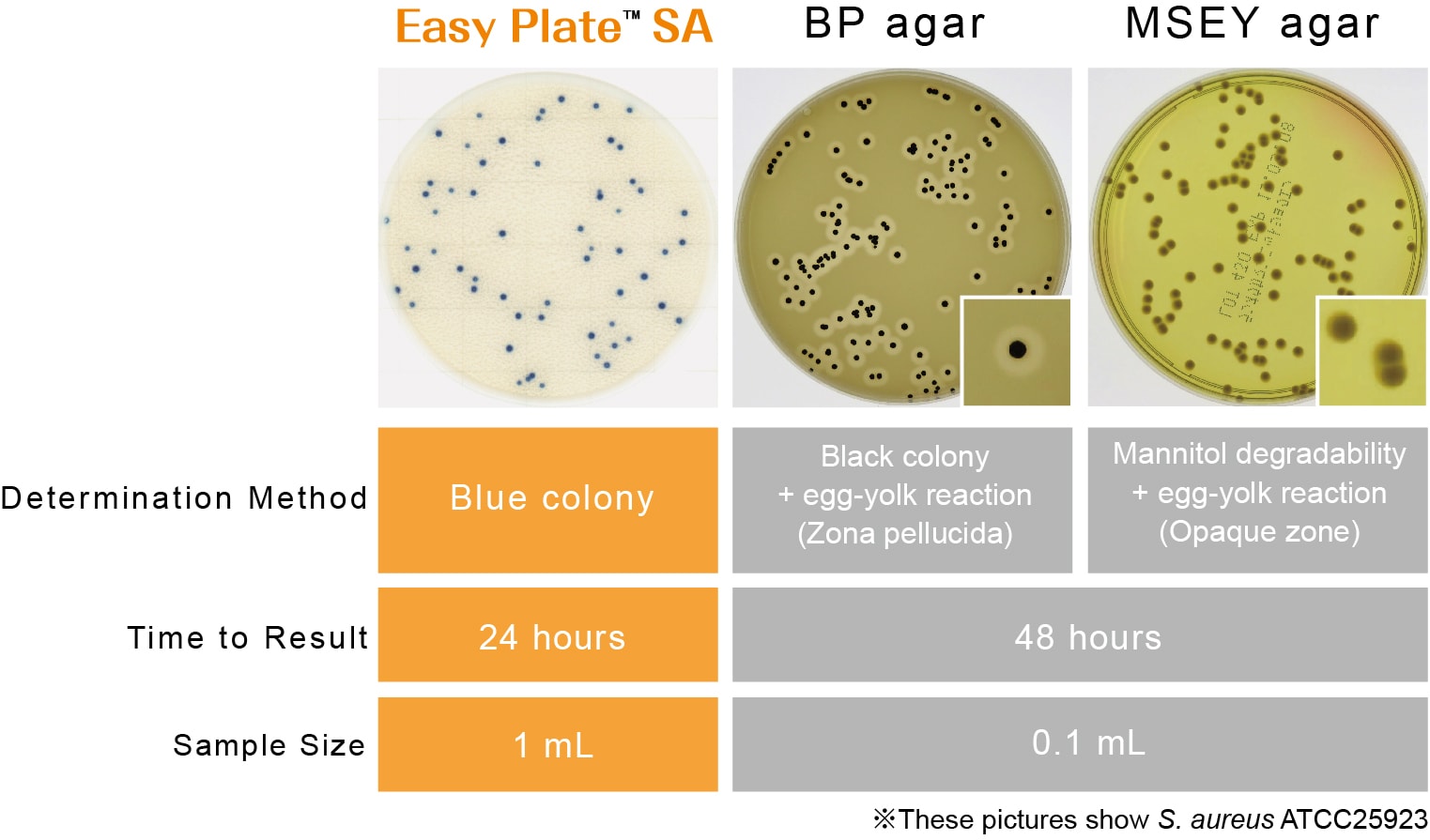
- Results in 24 hours: Half the 48 hours needed on Baird-Parker or MSEY agar.
- No egg-yolk reaction to confirm: S. aureus colonies are simply blue.
- Highly specific: Inhibitors suppress other bacteria, and any that do grow are pink to red-violet.
- One sheet per test: A single Easy Plate replaces the three or more plates usually needed for surface plating.
- Independently certified: AOAC RI PTM, MicroVal and NordVal certification supports your audit records.
Videos
Features
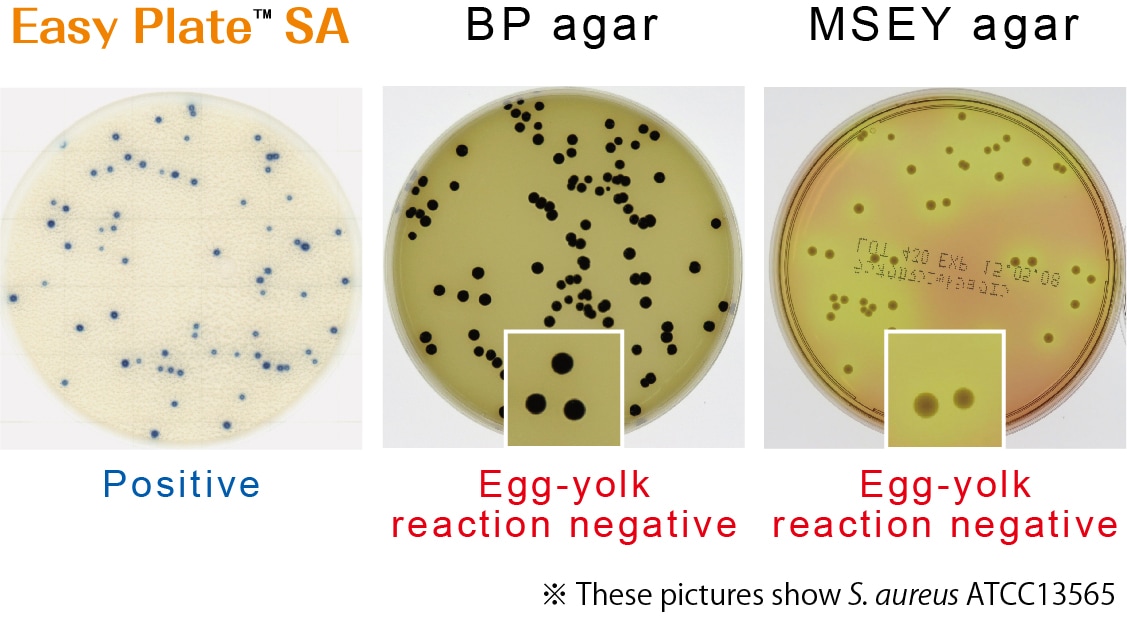
Blue colonies in just 24 hours
The colour change makes identification simpler than on agar media, with no need to confirm the egg-yolk reaction. Incubation time is halved from 48 hours to 24 hours.
Highly specific
- Detects strains of S. aureus that show a negative egg-yolk reaction on traditional agar media.
- The selective media inhibits many bacteria other than S. aureus. Any that do grow are pink to red-violet, so they are easy to tell apart.
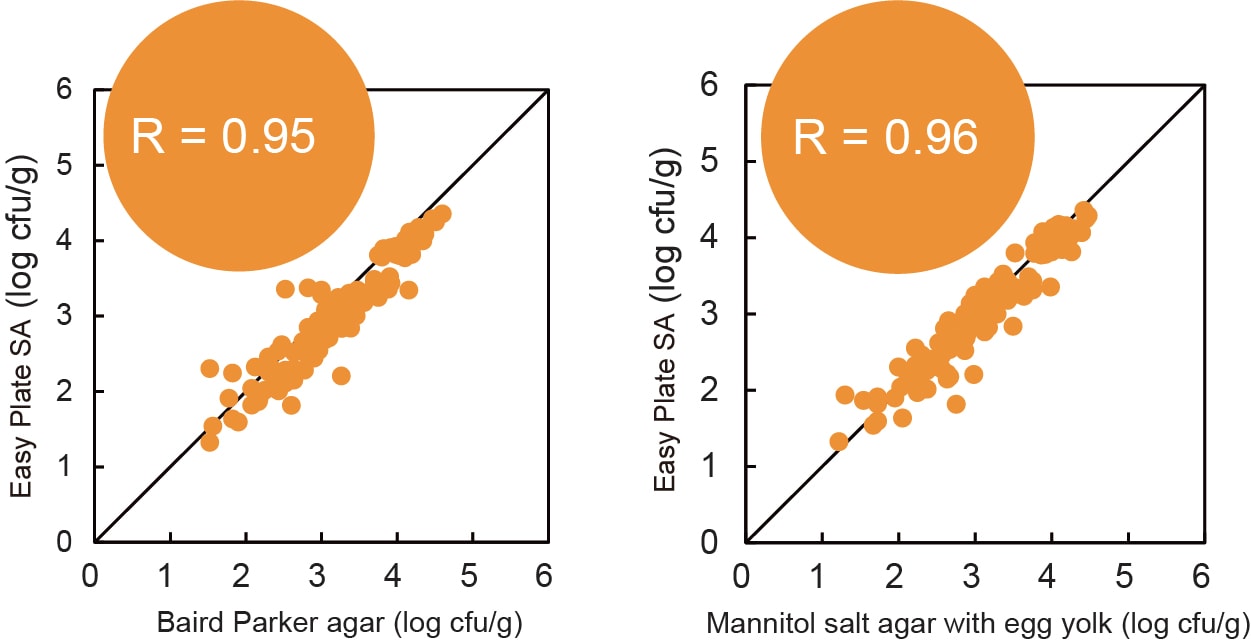
High correlation with standard agar
Results correlate closely with Baird-Parker agar (R = 0.95) and mannitol salt agar with egg yolk (R = 0.96) across a range of foods (research by DNP).
Colouring
S. aureus colonies are a distinct blue, which makes counting easy. Other bacteria are inhibited; if any grow, they are pink to red-violet.
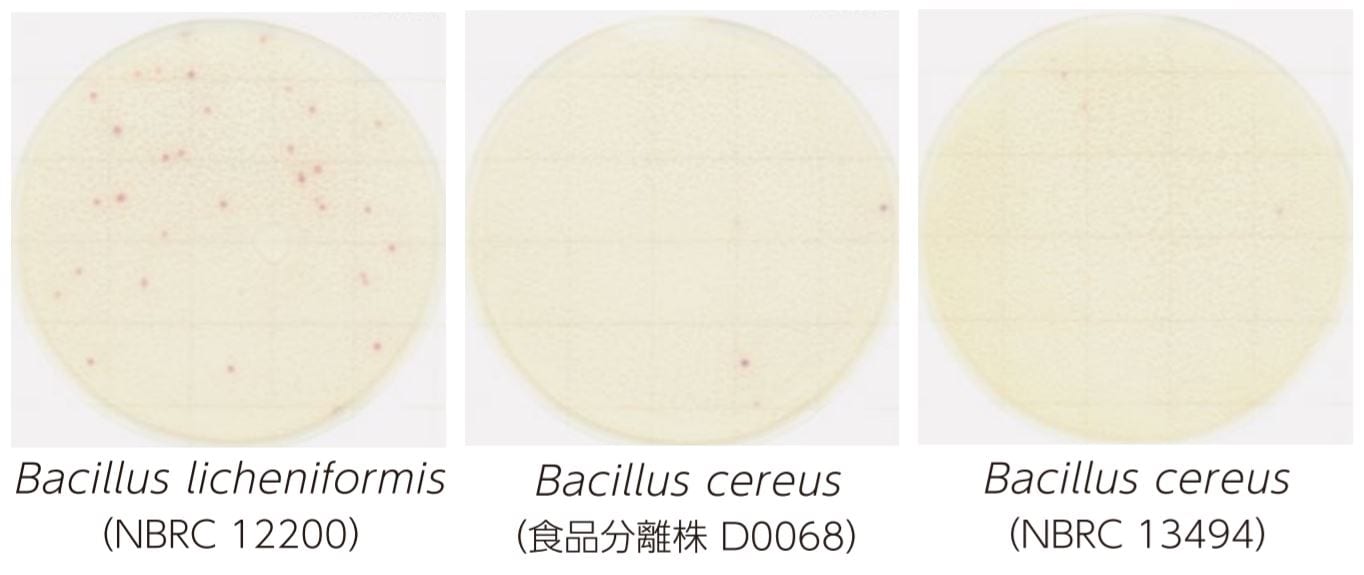
Examples
Colony colours with different strains and foods. Colours are for example only.


How it works
- 1Peel open the cover film.
- 2Add the sample to the centre of the plate.
- 3Close the cover film. The sample spreads evenly across the plate without a spreader.
- 4Incubate at 35 or 37 ± 1 ℃ for 24 ± 1 hours.
- 5Count the blue colonies by eye, or automatically with the Easy Plate Colony Counting Scanner.
Technical Specification
| Packaging | 100 tests (25 tests × 4 bags) |
|---|---|
| Target microorganism | Staphylococcus aureus |
| Incubation time | 24 ± 1 hours |
| Incubation temperature | 35 or 37 ± 1 ℃ |
| Storage (unopened) | 2–8 ℃ |
| Storage (after opening) | Fold the open end of the package at least twice and tape it. Store in a refrigerator (2–8 ℃) and use within 3 months. |
| Shelf life | 12 months after manufacturing date |
| Certification | AOAC RI PTM, MicroVal & NordVal (certificates under Documentation) |
Storage Conditions
Before opening: store Easy Plate in a refrigerator at 2–8 ℃. Before the packaging is opened, it may be kept at up to 25 ℃ for a maximum of 14 days, or up to 30 ℃ for a maximum of 5 days.
After opening: return any unused sheets to the original packaging, fold the end over twice and seal it securely with tape. Under refrigeration (2–8 ℃), opened packs keep for:
- Easy Plate AC, EC, CC, SA, EB, AC-R: 3 months
- Easy Plate YM-R: 1 month
After sample gelatinisation: if a gelled plate is to be used the following day, keep it refrigerated in a sealed condition and use it within 14 days.
Effects of improper storage: expired plates, or plates exposed to 40 ℃ for 10 days, darken noticeably and the sample no longer spreads evenly. See the Easy Plate Storage Condition guide for photo comparisons.




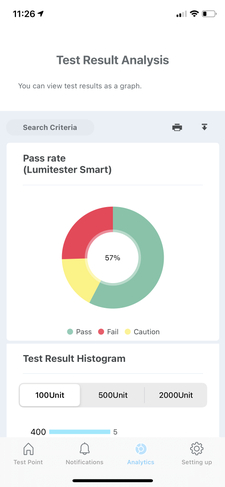 Exportable Data and Reports for Regulatory Compliance
 See how A3 technology finds what ATP technology can’t